Policy Factsheet
Solving America’s STEM Workforce Crisis: Broadening Participation in Science Education and Careers
Action
To sustain a robust STEM workforce, Congress should direct NSF and other federal agencies to continue to support programs that:
- Strengthen the U.S. talent pipeline.
- Ensure individuals from underrepresented communities across the country can enter and sustain a career as part of the STEM workforce.
America's Leaking Talent Pipeline
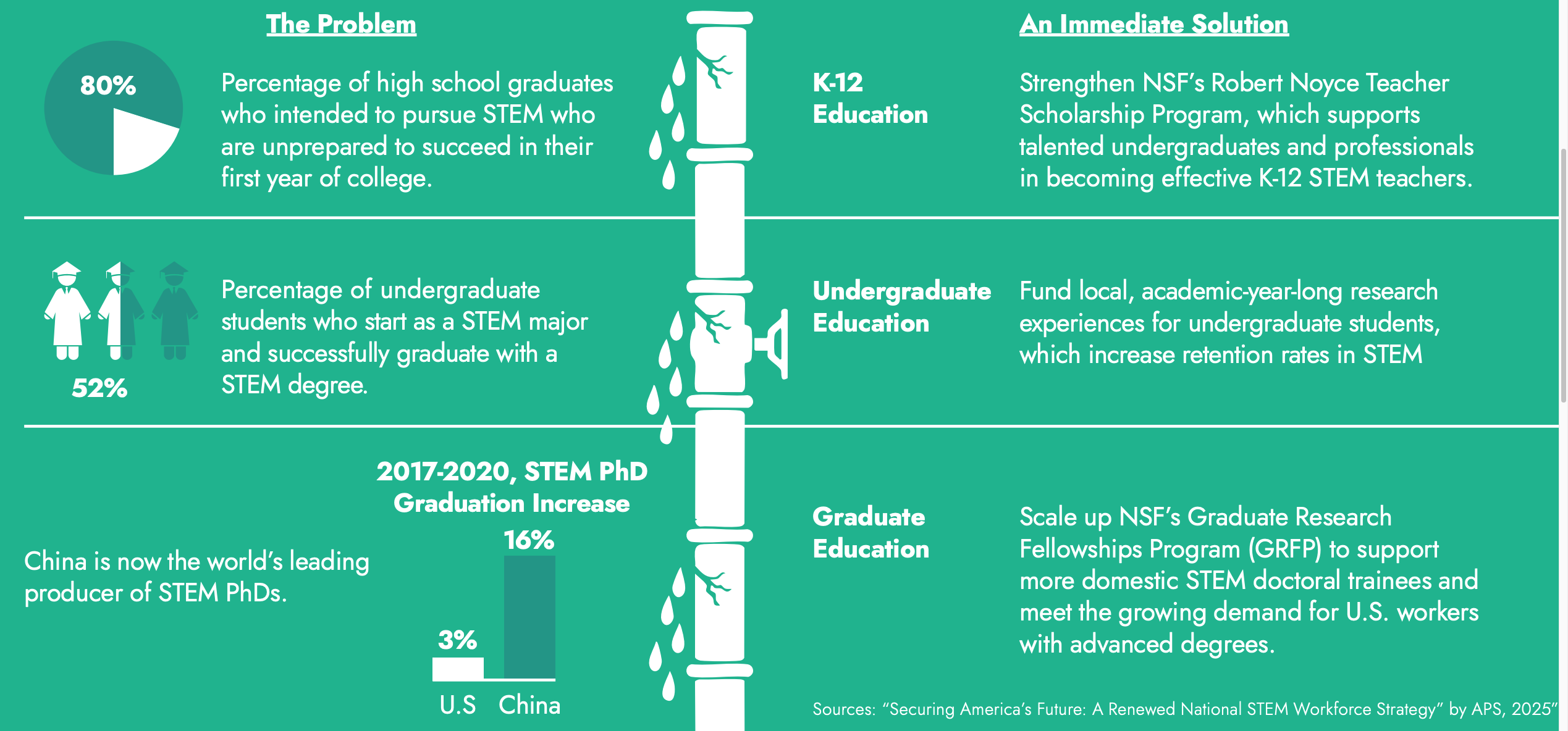
Sources: "Securing America's Future: A Renewed National STEM Workforce Strategy" by APS 2025
A robust STEM workforce underpins American industry
"For the semiconductor industry alone, [the] projected total gap [is] approximately 17,000 master's and PhD engineers by the end of the decade."
— Semiconductor Industry Association, Chipping Away, 2023
STEM careers support American economic mobility
Now and in the future, STEM careers offer a path to higher salaries and lower unemployment for Americans.
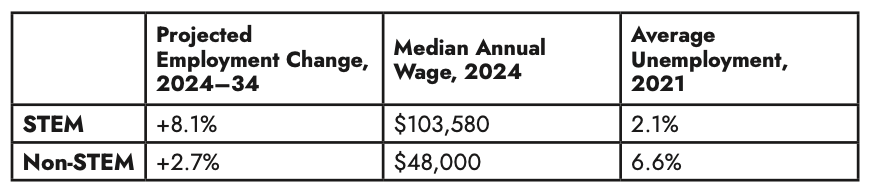
Sources:
The U.S. Thrives When All Have Opportunity
Members of Congress should:
- Support the Senate CJS Committee’s FY 2026 Appropriations report language calling for “ensuring individuals from underrepresented communities across the country can enter and sustain a career as part of the STEM workforce”.
- Fund programs that address systemic access issues in the education pipeline and increase participation by underrepresented groups.